


Introduction
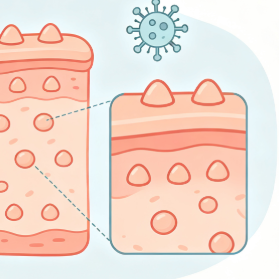
Human papillomavirus (HPV) infection represents a major global public health challenge with high prevalence. Persistent infection with high-risk HPV can induce malignant lesions such as cervical cancer and head and neck squamous cell carcinoma. However, HPV exhibits strict species specificity and infects only human epithelial cells. It is difficult to establish stable models in conventional small laboratory animals, which hinders research on pathogenesis, new drugs and therapeutic vaccines.
Cottontail rabbit papillomavirus (CRPV) is an ideal homologous surrogate virus for HPV. Using genome-mediated technology, a papilloma model can be established on the back of New Zealand rabbits, which fully recapitulates the disease progression of HPV infection, hyperplasia and malignant transformation, serving as the gold-standard model for translational research on papillomaviruses.CRPV (cottontail rabbit papillomavirus, officially named SfPV1) is the first DNA virus proven to be oncogenic and the optimal homologous animal virus for preclinical research in place of human HPV. It has a circular double-stranded DNA structure with a well-characterized genome and easy editing. The virus specifically infects only cutaneous epithelial tissues.
Pathogenic mechanism:Highly homologous to HPV, it regulates host cell proliferation and inhibits apoptosis via E6 and E7 genes to induce cutaneous papillomas. Its core feature lies in the capacity for spontaneous malignant transformation; after 8–14 months of feeding, the malignant transformation rate of benign tumors can reach 66%–80%, perfectly mimicking the carcinogenic process of high-risk HPV. Meanwhile, modeling via direct genomic inoculation can avoid issues such as uneven viral infection dose and contamination in traditional infection methods, achieving higher experimental precision.
Treatment Regimens and Latest Research Progress of CRPV-Related Lesions
Currently, there are no specific drugs available to completely cure HPV/CRPV-related lesions in clinical practice. Conventional treatments only provide symptomatic relief with a high recurrence rate. Relying on the CRPV rabbit model, various novel therapeutic strategies are continuously evolving, forming two major systems including conventional therapies and innovative research-based treatments.1.Conventional treatment:primarily based on physical intervention plus topical medication.
·Physical therapy:cryotherapy, laser, electrocautery, etc., can remove visible tumors, but cannot eliminate latent viruses in the basal layer of the skin, resulting in high recurrence rates.
·Topical drug therapy:mainly antiviral agents such as cidofovir, which can inhibit viral DNA replication and reduce lesion size; however, it has limited efficacy against refractory and large papillomas, and cannot prevent long-term malignant transformation.
2. Latest Research Progress in Therapeutics
·Latest research advances:Vaccines and combination therapies represent the core breakthrough directions. CRPV virus-like particle (VLP) vaccines can activate specific immunity and regress established tumors; E6/E7-targeted DNA vaccines can effectively prevent lesions and block malignant transformation of benign tumors.
·Among them, the combination regimen of local cidofovir injection plus DNA vaccine can efficiently eliminate refractory papillomas and markedly reduce recurrence rates. In addition, innovative therapies such as VSV-targeted immune vaccines and genome editing have all undergone efficacy validation using this model, offering brand-new research avenues for the radical cure of HPV-related diseases.
 Introduction to CRPV Genome-Mediated Cutaneous Papilloma Model
on the Back of New Zealand Rabbits
Core Advantages:
Compared with the traditional viral solution modeling method, CRPV genome site-mediated modeling adopts purified viral DNA combined with skin pretreatment technology, delivering higher modeling accuracy and more stable results. It serves as a preferred animal model for HPV preclinical research with prominent core advantages.✅ Stable modeling and controllable cycle:New Zealand rabbits have flat dorsal skin and convenient operation conditions. The CRPV genome can be stably integrated into host cells, and typical papillomas form approximately 5 weeks after inoculation, with a modeling rate of nearly 100% and minimal individual differences. This model effectively avoids the shortcomings of traditional models, such as low modeling rate and uneven skin lesions.
✅ Highly recapitulated human pathology:It fully reproduces the complete disease progression of HPV, including latent infection, epithelial hyperplasia, tumor formation and spontaneous malignant transformation. Its pathological characteristics and molecular mechanisms are highly consistent with human HPV skin lesions and head and neck squamous cell carcinoma, making it the most ideal in vivo model for simulating human HPV-related disease progression.
✅ Wide adaptability and reliable data:It is applicable to a full range of research directions, including viral mechanism exploration, immunological research, drug screening, vaccine evaluation and carcinogenesis mechanism study. Compatible with mainstream detection methods such as pathological sectioning, immunohistochemistry and multi-omics sequencing, it presents excellent experimental repeatability and high data reliability.
✅ Cost-effective and highly operable:Compared with high-primate models, New Zealand rabbits feature low feeding costs and fast reproduction. They can tolerate multiple surgeries and sampling procedures, support long-term disease progression monitoring and repeated drug intervention, and are suitable for large-scale scientific research experiments.


Model & Pharmacodynamic Evaluation Case Sharing
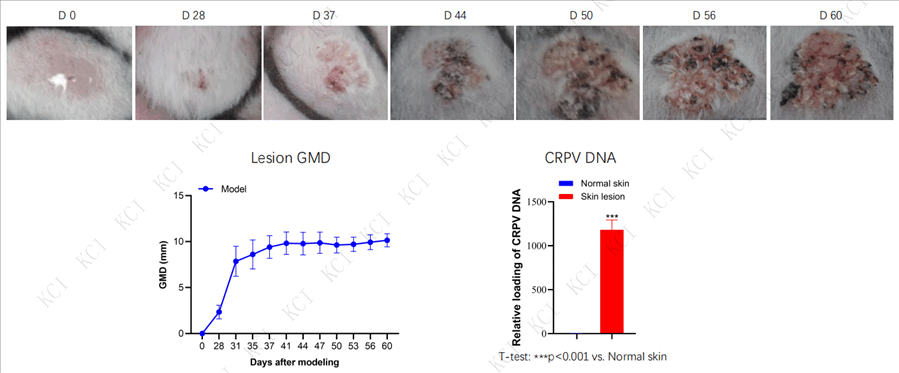
01 Construction of CRPV Genome-Mediated Cutaneous Papilloma Model on the Back of New Zealand RabbitsData Presentation
·Skin Status at Different Modeling Time Points
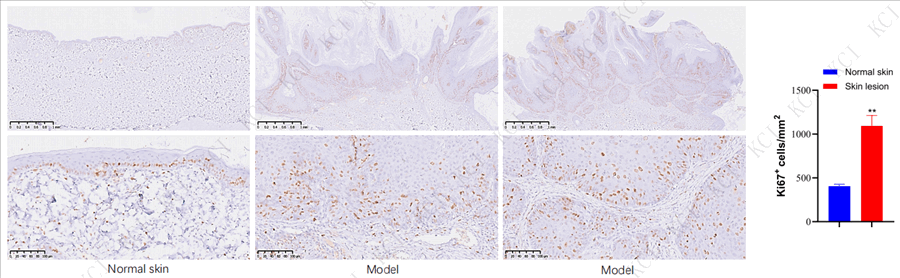
·Histological Changes of Cutaneous Papilloma

·Epidermal Cell Proliferation in Cutaneous Papilloma (Ki67 IHC Staining)
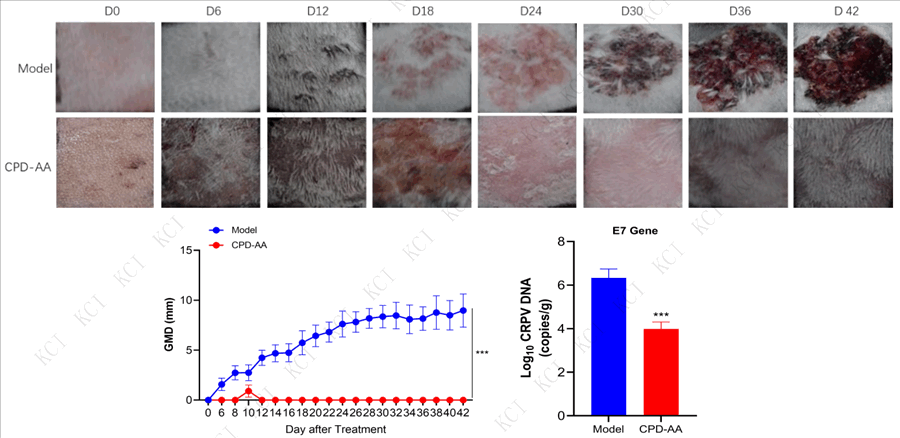
 02 Pharmacodynamic Test of Test Article in Rabbit CRPV Cutaneous Wart Model - Prophylactic Treatment
Data Presentation
·Papilloma GMD Growth Curve / Viral DNA Load Detection
·Pathological Analysis of Papilloma
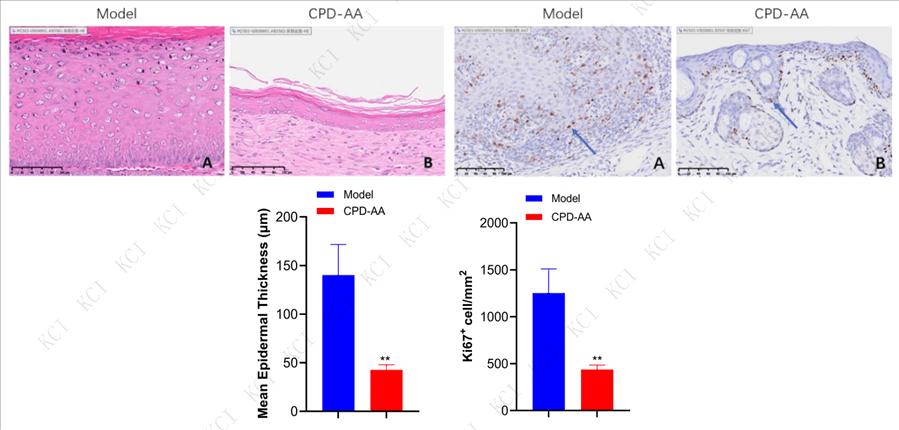 03 Pharmacodynamic Experiment on CRPV Genome-Mediated Cutaneous Papilloma Model on the Back of New Zealand Rabbits - Early Intervention Treatment
Data Presentation
·Papilloma GMD Growth Curve after Administration
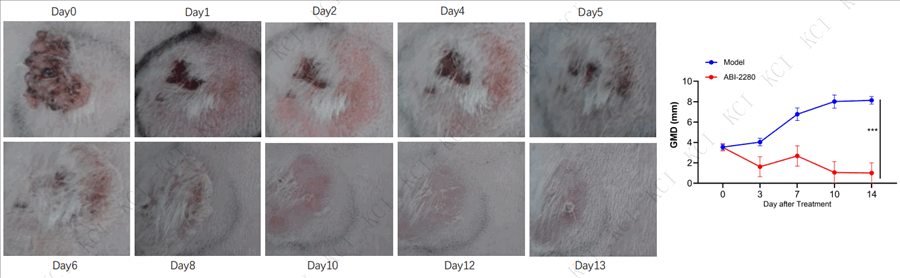
·Histological Changes of Cutaneous Papilloma after Treatment
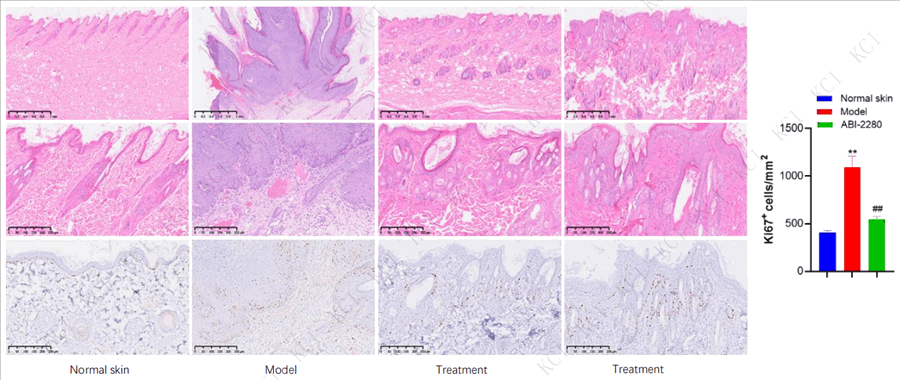
KCI・KMQ
Anti-infection Vaccine and Drug R&D Service Platform
KCI・KMQ has obtained both BSL-2 and ABSL-2 qualifications. The platform provides anti-infection R&D services covering more than 100 pathogenic microorganisms (bacteria, viruses and fungi) for the development and research of human pharmaceuticals, veterinary drugs and pet medicines.The BSL-2 laboratory covers an area of approximately 200 m², equipped for cell, virus and bacterial studies. The ABSL-2 laboratory occupies about 1000 m², including 300 m² for small animal laboratories and 700 m² for large animal laboratories.

·In vitro anti-infection pharmacodynamic tests:antiviral activity (EC50/CC50 assay); MIC susceptibility test; FIC index determination; biological property assessment, etc.
·In vivo immunogenicity tests for vaccines:neutralization assay, hemagglutination inhibition assay, cellular immunity evaluation, etc.
·Animal challenge protection tests:for vaccines and antiviral drugs;
·Infectious animal studies.
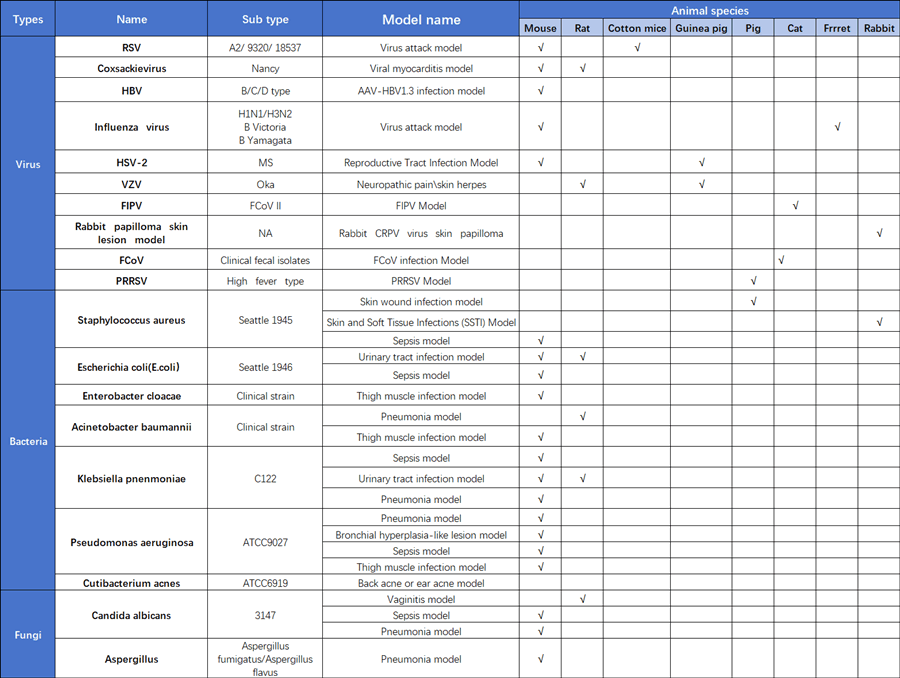
Conclusion
Should you need the detailed experimental protocol of the model, please leave a message in the comment section. We will respond to you promptly.