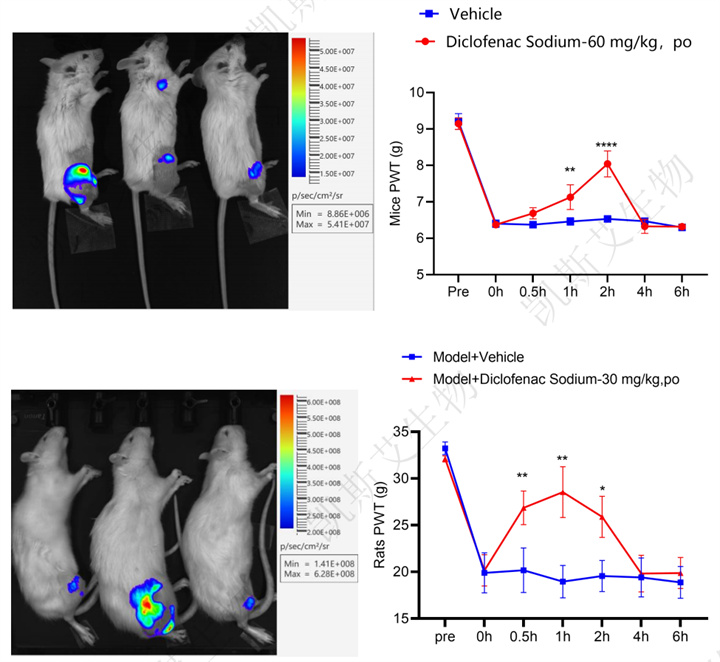
Painis an unpleasant sensation and emotional experience caused by tissue damage or potential damage (International Association of Pain Societies, IASP). It has three attributes: sensory discrimination (such as stabbing and burning pain), emotional response (such as anxiety and fear), and autonomic nervous response (such as increased heart rate and blood pressure). It is a defensive signal of the body and one of the most common clinical symptoms.
Disease base:There are over 300 million chronic pain patients in China, with an annual increase of 10-20 million people. The patient population is also showing a trend of youthfulness, but the current pain awareness rate, medical treatment rate, and treatment satisfaction are all at a low level. The huge demand gap provides a broad space for the market.
Drug market:The market size of pain relief drugs in China is expected to reach 127.8 billion yuan by 2025, accounting for 62.3% of the overall pain therapy market. With the promotion of the green channel for innovative drug approval, multiple new neuropathic pain drugs have been approved, and coupled with the inclusion of multiple pain drugs in medical insurance reimbursement, the future drug market size will continue to expand.
Model Classification
| Classification dimension | type | core features | Corresponding to common animal models |
| Pathophysiological mechanism | Nociceptive pain | Triggered by nociceptive stimuli (such as mechanical, thermal, chemical stimuli) that activate pain receptors (such as TRPV1, TRPM8) | Foot injection of carrageenan (inflammatory) and hot plate test |
| Neuropathic Pain | Damage or dysfunction of the nervous system (peripheral/central) resulting in (such as nerve compression, inflammation, degeneration) | CCI (sciatic nerve compression), SNI (sciatic nerve branch injury), spinal cord injury models | |
| Central pain | Caused by spinal cord or central nervous system injury (such as spinal cord injury Multiple sclerosis | Spinal cord contusion model, CCI central sensitization model | |
| course of disease | Acute pain | Disease duration<1 month, accompanied by tissue damage, good prognosis | Tail tip thermal radiation pain and incision pain model |
| chronic pain | Disease duration>3 months, persistent or recurrent pain, easily accompanied by anxiety/depression | CCI、 Bone cancer pain, chronic inflammation model, chemotherapy induced neuropathic pain | |
| Nature of pain | Mechanical pain | Caused by mechanical stimulation (such as pressing, pulling) | Von Frey Mechanical Foot Shrinkage Threshold Detection |
| Hot pain/Cold pain | Triggered by temperature stimulation | Hot plate experiment, cold plate experiment | |
| Chemical pain | Chemical substances (such as capsaicin, formaldehyde) stimulate and trigger | Capsaicin plantar injection model |
model selection
| Type of pain | Common models | Applicable scenarios | Select key points |
| Inflammatory pain | Fu's complete adjuvant arthritis model (CFA) | Simulating chronic inflammatory pain such as rheumatoid arthritis, suitable for studying the correlation between inflammation and pain, as well as the efficacy of anti-inflammatory and analgesic drugs | The model has strong stability, persistent inflammatory response, and can observe long-term symptoms such as joint swelling and pain sensitization, making it a classic choice for the study of chronic inflammatory pain |
| Inflammatory pain | Carrageenan foot swelling model | For acute inflammatory pain, used for preliminary screening of anti-inflammatory and analgesic drugs | Easy to operate, low cost, short duration of pain (within a few days), able to quickly evaluate the inhibitory effect of drugs on acute inflammation |
| neuropathic pain | Spinal Cord Nerve Ligation Model (SNL) | Simulating neurogenic pain caused by intervertebral disc herniation, nerve root lesions, etc., is suitable for exploring the pain mechanisms related to nerve injury | Accurate localization of nerve damage, stable symptoms of pain hypersensitivity and trigger induced pain, commonly used to validate drugs targeting nerve repair or inhibiting abnormal nerve discharge |
| neuropathic pain | Chronic Contraction Injury Model (CCI) | Simulating peripheral nerve injury pain such as sciatic nerve compression, suitable for basic research on neuropathic pain | Chronic pain is induced by nerve ligation, and the symptoms are highly similar to those of patients with clinical peripheral nerve injury. The model has a high success rate and good reproducibility |
| Visceral pain | Acetic acid writhing model | Classic model of visceral pain mediated by acute inflammation | The acetic acid writhing model, as a classic model of visceral pain mediated by acute inflammation, has strong specificity in drug screening and is core adapted to analgesic drugs that inhibit inflammatory pathways, block the release of pain inducing substances, or directly act on pain receptors. It is particularly suitable for high-throughput screening (easy to operate, low cost, intuitive results) |
| Cancer pain | Bone cancer model | Simulating severe pain caused by tumor invasion of bones,Used for the development of anti-cancer pain drugs | Inducing bone destruction and pain through transplantation of tumor cells can simulate the progressive exacerbation of bone pain in cancer patients, making it suitable for testing opioid drugs or pain relieving drugs targeting tumor invasion |
| postoperative pain | Surgical incision model | Simulating pain after minimally invasive surgical procedures for optimizing postoperative pain management plans | Tailored to clinical surgical scenarios, it can assess inflammatory pain caused by incision trauma and provide data support for postoperative local analgesic drugs or physical therapy plans |
KCI • KMQ Pain Disease Pharmacology and Pharmacology Evaluation Platform
The KCI • KMQ Pain Disease Pharmacology and Pharmacology Evaluation Platform has a comprehensive animal model system and has accumulated rich project experience, which can meet diverse research needs. At present, the company has established extensive long-term cooperation with many well-known pharmaceutical companies and research institutions at home and abroad, providing a solid foundation for the development of innovative drugs.
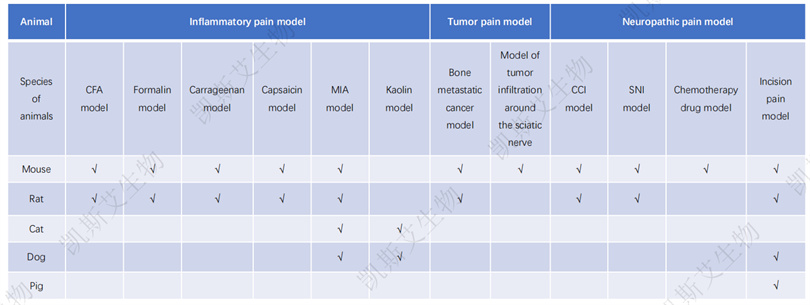
Case study sharing of inflammatory pain model
01 Inflammatory pain induced by carrageenan
data display• Swelling volume of foot; Mechanical pain sensitivity threshold
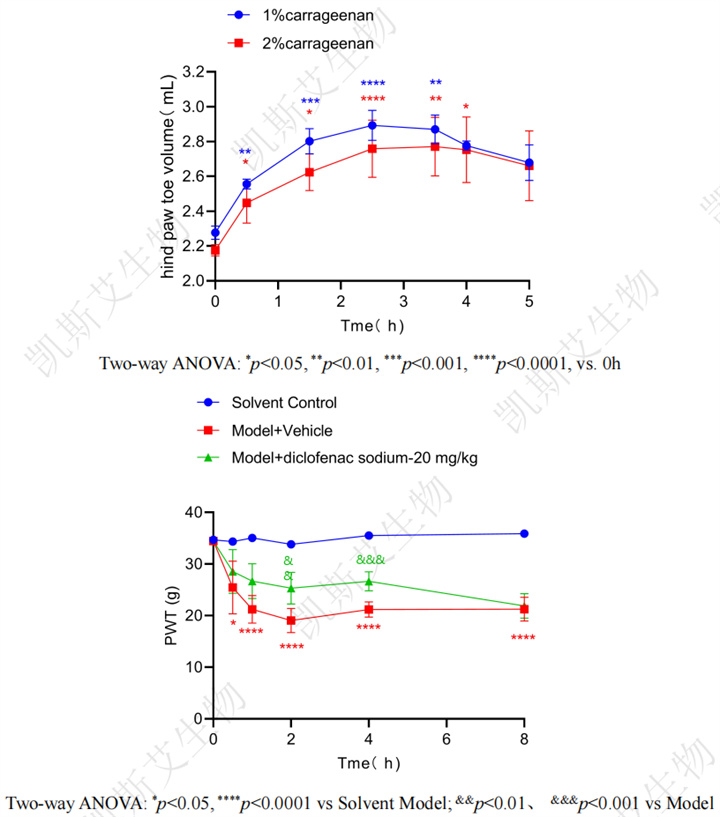
After injection of carrageenan, the plantar swelling of animals was significant, and the mechanical pain threshold of animals was significantly reduced. The mechanical pain sensitivity threshold of animals treated with diclofenac sodium was significantly increased.
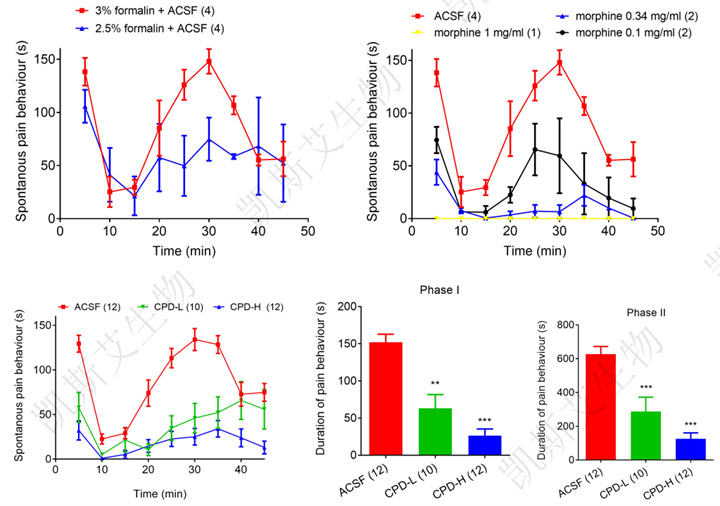
02 Formalin induced inflammatory pain
data display
• Acute pain phase (phase I, 0-10 minutes) and inflammatory pain phase (phase II, 10-60 minutes): The total duration of licking, biting, and lifting the foot.
03 CFA induced inflammatory pain
data display• Mechanical pain sensitivity threshold
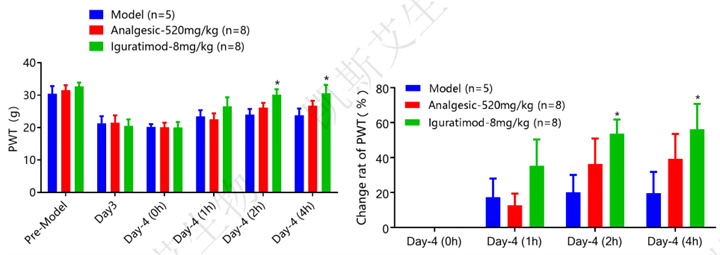
Case study sharing of neuropathic pain model
01 CCI model
data display
• Mechanical pain sensitivity threshold
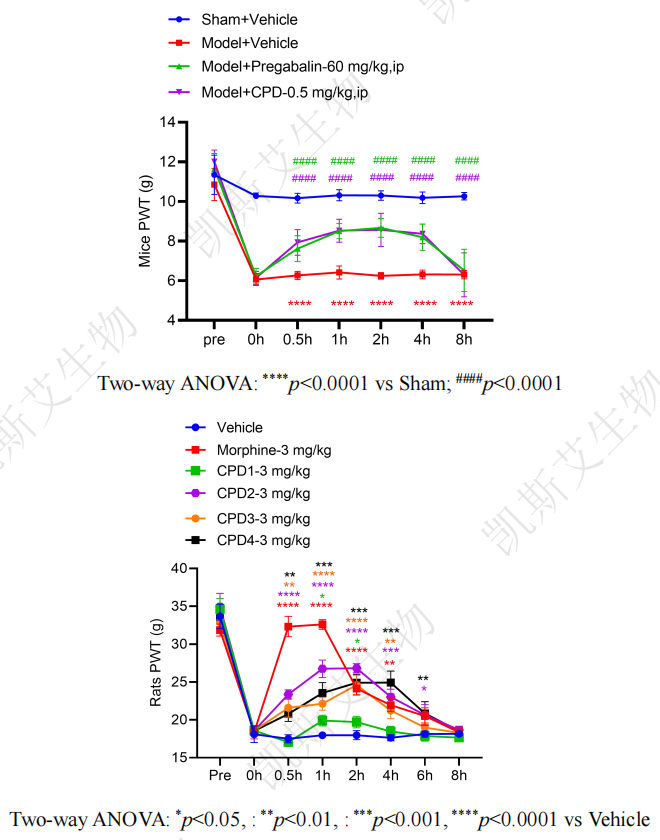
After modeling, the mechanical pain threshold of animals significantly decreased, while the mechanical pain sensitivity threshold of animals treated with morphine and the test substance significantly increased.
02 Rat SNI model
data display• Mechanical pain sensitivity threshold
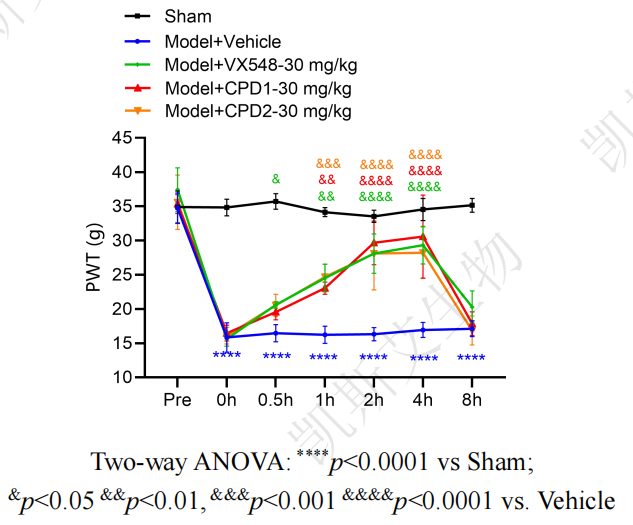
After modeling, the mechanical pain threshold of animals significantly decreased, while the mechanical pain sensitivity threshold of animals treated with morphine and the test substance significantly increased.
Case sharing of tumor pain model
01 Bone cancer pain
data display• Mechanical Pain Sensitivity Threshold (Mouse&Rat)